
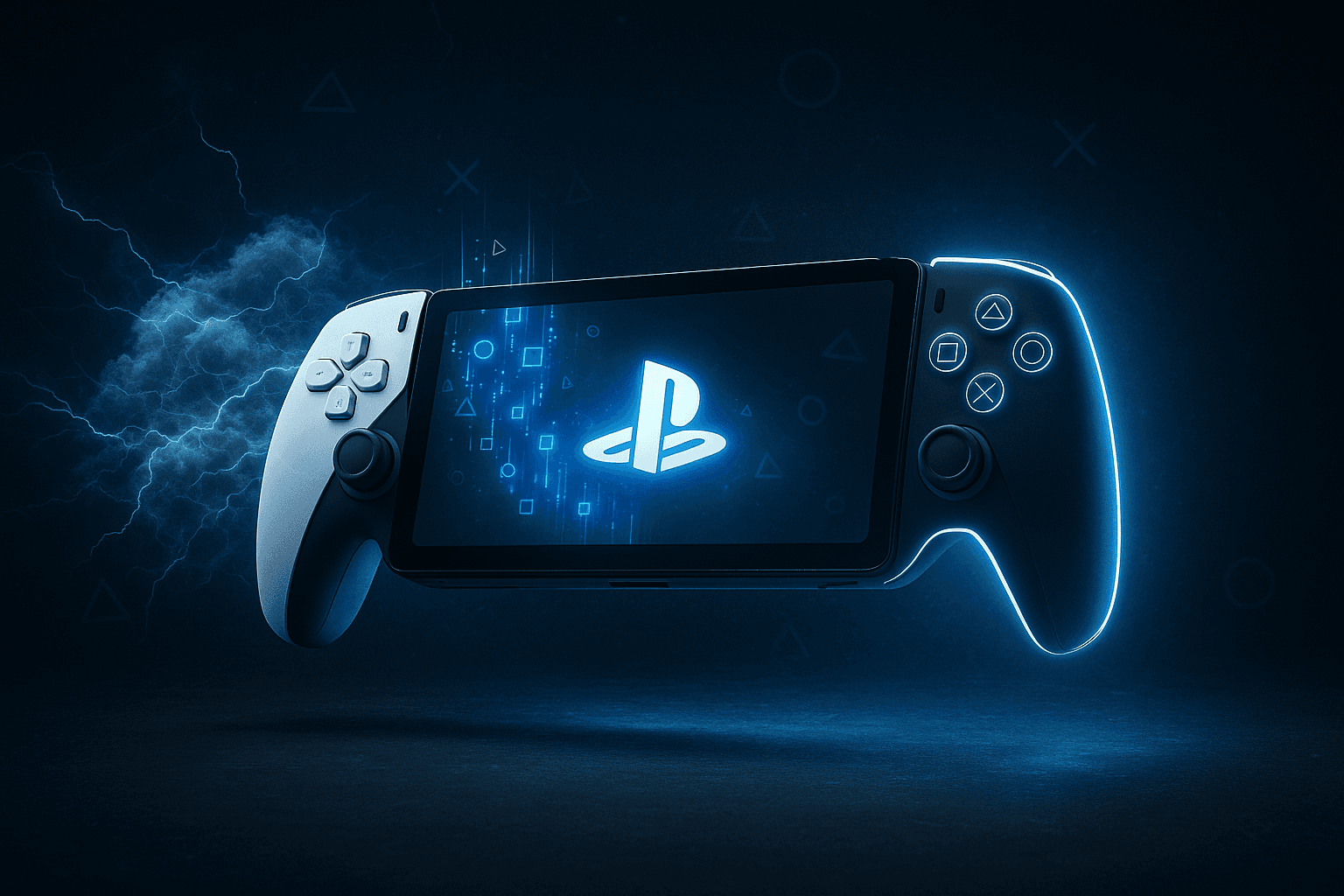
Sony's PlayStation Portal has undergone a remarkable transformation since its November 2023 launch. What began as a simple Remote Play accessory for the PlayStation 5 has evolved into something more ambitious—a device attempting to deliver cloud gaming experiences on the go. However, this evolution has exposed fundamental limitations that highlight why Sony desperately needs to re-enter the dedicated handheld console market with a true native gaming device.
🎮 The Portal Paradox
Unexpected Success: Despite being designed as a simple accessory, PlayStation Portal became a surprise hit, with Sony Interactive Entertainment CEO Hideaki Nishino calling it a "huge success" in 2024. The device is now the "most widely used device for PS5 Remote Play," according to Sony's Takuro Fushimi.
The Evolution: From Remote Play to Cloud Streaming
The PlayStation Portal's journey reflects Sony's attempt to adapt to changing market demands while working within the constraints of a streaming-only device. Understanding this evolution is crucial to appreciating both its achievements and limitations.
Phase 1: Remote Play Only (November 2023)
Initially, PlayStation Portal was a straightforward device with a single purpose:
- No Native Processing: The device had zero local computing power, functioning purely as a display and input device
- Home-Only Use: While technically capable of working anywhere with Wi-Fi, practical limitations restricted it to in-home use
- Network Challenges: Public Wi-Fi connections were difficult to establish, and the high-speed requirements made portable use impractical
- Single Purpose: Designed to free up the main TV or enable gaming in another room within the same household
Phase 2: Cloud Gaming Beta (2024)
Recognizing the Portal's popularity, Sony expanded its capabilities:
- PS Plus Premium Integration: Added cloud streaming support for over 120 PS5 games from the PS Plus Game Catalog
- Public Wi-Fi Improvements: Made it easier to connect to public networks
- Expanded Library: Curated selection of games available for streaming, though subject to change
- Beta Limitations: Feature remained in testing phase with restricted functionality
Phase 3: Full Cloud Streaming Release (December 2025)
The latest update represents Sony's most ambitious attempt to transform Portal into a portable gaming solution:
Major Features
Expanded Game Library
- Cloud Streaming exits beta phase, becoming a full feature
- Access to over 3,000 games at launch (vastly expanded from the initial 120)
- Stream digitally owned games from PlayStation Store, not just PS Plus catalog titles
- Requires PS Plus Premium subscription ($160/year) to use cloud streaming
Enhanced Functionality
- In-Game Purchases: Can now make purchases (DLC, virtual currency) while cloud streaming
- Multiplayer Invites: Receive and accept game invites during cloud streaming sessions
- Accessibility Improvements: Screen reader tool and adjustable text sizes added
Storage Benefits
- Stream games without consuming PS5 internal storage space
- Helpful for players with large digital collections who can't install everything
- SSD expansion costs can be avoided for games that are primarily streamed
The Technical Reality: Why Cloud Gaming Fails
Despite Sony's ambitious updates, the fundamental technical limitations of cloud gaming create an insurmountable barrier to reliable portable gaming experiences.
Official vs. Real-World Requirements
| Connection Type | Sony's Minimum | Sony's Recommended | Real-World Reality |
|---|---|---|---|
| Minimum Required | 5 Mbps | 15 Mbps | Insufficient |
| Coffee Shop Wi-Fi | 14.97 Mbps | 37.14 Mbps | Failed to Launch |
| Mobile Tethering | 17.29 Mbps | N/A | Failed to Launch |
| Working Connection | 802 Mbps | N/A | 54x Recommended Speed |
Why Cloud Gaming Struggles
Latency Issues
Even with fast connections, network latency creates input lag that makes action games unplayable. The round-trip time for controller input → server → video stream → display can exceed 100ms, making precise gameplay impossible.
Connection Instability
Public Wi-Fi networks are inherently unstable. Even when speeds appear adequate, packet loss, jitter, and network congestion can cause stuttering, disconnections, and unplayable experiences.
Bandwidth Requirements
Streaming high-quality game video requires consistent, dedicated bandwidth. Shared public networks cannot guarantee the sustained throughput needed for smooth 1080p or higher gaming experiences.
Server Proximity
Cloud gaming performance depends heavily on physical distance to Sony's servers. Users far from data centers will experience worse latency regardless of connection speed, making portable use in many locations impractical.
The Market Context: Why Handhelds Matter Again
The gaming landscape has fundamentally shifted since Sony's last dedicated handheld, the PlayStation Vita. Understanding this context explains why Portal's limitations are particularly frustrating for players.
The Nintendo Switch Revolution
Nintendo's Switch changed everything about portable gaming:
- Hybrid Design: Same games, same experience whether docked or portable
- No Compromises: Full-featured games, not cut-down versions
- Massive Success: Over 140 million units sold, proving the market exists
- Switch 2 Impact: Launched in 2025 and became the fastest-selling console ever
The PC Handheld Explosion
While Portal struggled with streaming, PC handhelds flourished:
Market Leaders
Steam Deck
- Native PC game execution, no streaming required
- Access to entire Steam library
- Proven success with millions of units sold
- Inspired numerous competitors
Competitors
- ASUS ROG Ally (with Xbox partnership)
- Lenovo Legion Go
- Various Windows-based handhelds
- All offering native game execution, not streaming
Xbox's Strategy
Even Microsoft recognizes the importance of portable gaming:
- ROG Xbox Ally Partnership: Collaboration with ASUS for Xbox-branded handhelds
- Play Anywhere Initiative: Focus on cross-platform game access
- Cloud Gaming as Supplement: Uses cloud as enhancement, not primary delivery method
Sony's Handheld History: Lessons from the Past
Understanding Sony's previous handheld attempts provides crucial context for why a new dedicated device makes sense now.
PlayStation Portable (PSP) - 2004-2014
Success Story
- Sales: Approximately 82.5 million units sold worldwide
- Innovation: First handheld with console-quality graphics
- Media Features: UMD movies, music playback, web browsing
- Game Library: Strong first-party and third-party support
- Legacy: Established Sony as a serious handheld competitor
PlayStation Vita - 2011-2019
Underappreciated Brilliance
- Sales: Estimated 14-16 million units (significantly lower than PSP)
- Technical Excellence: Dual analog sticks, OLED screen, powerful hardware
- Innovation: Remote Play to PS3/PS4, touch controls, rear touchpad
- Challenges: Proprietary memory cards, high prices, limited marketing
- Legacy: Beloved by enthusiasts but failed to reach mainstream success
Why Vita Failed (And Why Now Is Different)
The Vita's struggles don't necessarily predict failure for a new handheld:
| Factor | Vita Era (2011-2019) | Current Market (2025+) |
|---|---|---|
| Market Expectation | Separate handheld games | Same games, portable |
| Competition | 3DS dominance | Proven market exists |
| Technology | Proprietary formats | Standardized solutions |
| Consumer Demand | Uncertain | Proven by Switch/Steam Deck |
Rumors and Speculation: Sony's Potential Solutions
Multiple reports suggest Sony is already working on solutions to address the portable gaming gap. While nothing is officially confirmed, the evidence is compelling.
Rumor 1: True Vita Successor
Reports since 2024 suggest a dedicated handheld is in development:
- Native PS5 Game Execution: Can run PS5 games locally, not via streaming
- Dedicated Hardware: Custom SoC designed for portable PS5 gaming
- Full Compatibility: Access to entire PS5 library without network dependency
Rumor 2: Hybrid Console Approach
Following Nintendo's Switch model:
- Dockable Handheld: Portable device that slots into power-boosting dock
- PS6 Companion: Designed as companion device to PlayStation 6
- Seamless Transition: Play same games at home (docked) or on the go (portable)
- Cloud Integration: Uses cloud as enhancement, not primary delivery
Technical Evidence: Power Saver Mode
Some of the strongest evidence comes from developer requirements:
PS5 Power Saver Setting
Sony has been pushing developers to adopt a new "Power Saver" setting for PS5 games. This setting:
- Reduces performance of demanding games to cut energy usage
- Provides environmental benefits through lower power consumption
- Critically: Optimizes battery life for portable devices
- Makes it feasible to run PS5 games on battery-powered hardware
This feature makes little sense for a stationary console but is essential for a handheld device.
The Steam Machine Threat
Valve's upcoming Steam Machine could be a significant competitive threat:
- Hybrid Approach: Combines Steam Machine console with Steam Deck handheld
- Unified Ecosystem: Seamless experience across devices
- Market Disruption: Could capture significant market share if executed well
- Sony's Response: A hybrid PS6 + handheld could be a direct competitive response
The Path Forward: What Sony Should Do
Based on market analysis, technical realities, and consumer demand, here's what Sony needs to deliver:
1. Native Game Execution
The most critical requirement:
- No Streaming Dependency: Games must run locally on the device
- PS5 Compatibility: Ability to run PS5 games natively, even if scaled down
- Offline Capability: Full functionality without internet connection
- Performance Scaling: Dynamic resolution/quality adjustments for battery life
2. Hybrid Design Philosophy
Learn from Nintendo's success:
- Dock Compatibility: Enhanced performance when connected to TV/dock
- Seamless Transition: Same save files, same games, same experience
- Cloud as Enhancement: Use streaming to supplement, not replace, local execution
3. Competitive Pricing
Avoid Vita's pricing mistakes:
- Standard Storage: Use standard NVMe SSDs, not proprietary formats
- Reasonable Entry Point: Price competitively with Steam Deck and Switch 2
- Value Proposition: Emphasize access to existing PS5 library
4. Developer Support
Ensure strong software ecosystem:
- Backward Compatibility: Automatic support for existing PS5 games
- Developer Tools: Easy optimization for portable hardware
- First-Party Commitment: Major Sony studios developing for the platform
Conclusion: The Cloud Gaming Reality Check
PlayStation Portal's evolution demonstrates Sony's recognition that players want portable access to their PlayStation games. The latest cloud streaming update, with access to over 3,000 games, represents a significant investment in this vision. However, the fundamental limitations of cloud gaming technology make this approach fundamentally flawed for portable gaming.
Key Takeaways
- Portal's Success: Proves demand exists for portable PlayStation gaming
- Cloud Gaming Limits: Network infrastructure cannot reliably support portable streaming
- Market Validation: Switch and Steam Deck prove native handheld gaming works
- Technical Evidence: PS5 Power Saver mode suggests handheld development
- Competitive Pressure: Steam Machine and Xbox handhelds increase urgency
- Consumer Demand: Players want unfettered access to games, not network-dependent streaming
The dream of portable PlayStation gaming is real and achievable—but it requires native hardware, not cloud streaming. Sony's latest Portal update, while impressive in scope, only highlights this reality more clearly. Until Sony delivers a true handheld console capable of running games locally, portable PlayStation gaming will remain a compromised experience limited by network conditions rather than enabled by technology.
For many players, the vision is simple: access to the PlayStation games they own, wherever they want to play them, without hoping the connection-quality gods are on their side. No amount of cloud streaming features can make that dream a reality. Only a dedicated handheld console can.
The Future of Portable Gaming
As cloud gaming continues to struggle with technical limitations, the market is moving toward native handheld execution. Sony has the opportunity to lead this transition with a true PlayStation handheld—if they're willing to commit to the hardware investment that players clearly want.
